
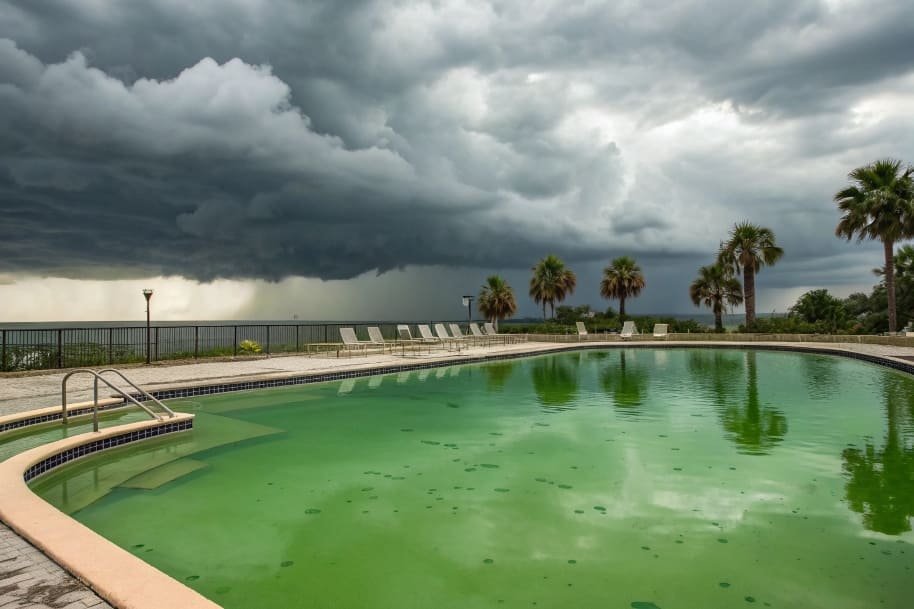
A cloudy, green pool is a customer's nightmare. Regular chlorination isn't cutting it, and you need a fast, effective solution to restore clarity and safety to the water.
Superchlorination, or "shocking," involves adding a large dose of a chlorine product to eliminate contaminants. The best practice is to pre-dissolve granular shock in a bucket of pool water, pour the solution around the pool's perimeter, and run the pump to circulate it thoroughly.
As a pool equipment expert, you know that shocking1 is a necessary corrective measure. But I've seen so many maintenance professionals do it in a way that damages equipment. They toss granules directly into the pool, where they settle and bleach liners, or they shock at the wrong time of day, wasting chemicals. Understanding the right process isn't just about cleaning the water; it's about protecting your client's investment in their pool and its equipment. For a distributor like you, Siau, explaining these details to your clients can set them, and you, apart from the competition. Let’s break down the process so you can share the best practices.
How many hours should I super chlorinate my pool?
You've shocked the pool, but now the client is asking when they can swim. Reopening the pool too soon is unsafe, but keeping it closed too long causes frustration.
After shocking, you must run the pump for at least one full turnover, typically between 8 to 12 hours, to ensure complete circulation. The pool is safe for swimming only after the free chlorine level2 has returned to the normal range of 1-3 parts per million (ppm).
The goal of running the pump isn't about counting hours; it's about achieving full water circulation. This is called a "turnover," the time it takes for your entire pool's volume of water to pass through the filter system once. For most residential pools, this is 8-12 hours. I always advise my clients to shock the pool in the evening. There are two main reasons for this. First, the sun's UV rays rapidly break down chlorine, so shocking at night ensures the chemical works for the maximum amount of time. Second, it allows the pump to run overnight, so the chlorine level has a chance to decrease to a safe level by the next day. The key is to test, not guess. Always use a reliable test kit to confirm the free chlorine is back between 1-3 ppm before telling a client it's safe to swim. This protects the swimmers and demonstrates your professional diligence.
What is the best way to chlorinate your pool?
Keeping a pool chlorinated seems simple, but which method is actually best? Choosing incorrectly leads to wasted money, fluctuating chemical levels, and frustrated customers who can’t get consistent results.
The best way to chlorinate a pool combines routine sanitation and occasional shocking. For daily use, an automatic chlorinator3 or salt chlorine generator4 provides the most consistent, hands-off results. Shocking should be used periodically or as needed to handle high bather loads or algae.
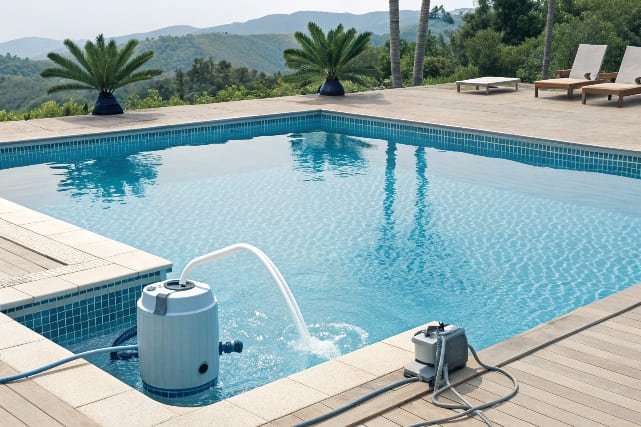
As someone who builds pool disinfection equipment, I believe consistency is everything. Relying solely on manually adding chlorine pucks to a floater or skimmer basket works, but it can lead to inconsistent chlorine levels. The water is often over-chlorinated right after you add the pucks and under-chlorinated as they dissolve. For your clients who want stability and less work, automated systems are the clear winner. Let's compare the main methods.
| Method | Consistency | Maintenance Effort | Upfront Cost | Long-term Cost |
|---|---|---|---|---|
| Floating Dispenser | Low | Low | Very Low | Moderate |
| Skimmer Basket | Low | Low | None | Moderate |
| Automatic Chlorinator | High | Low | Moderate | Moderate |
| Salt Chlorine Generator | Very High | Very Low | High | Low |
| Liquid Chlorine Feeder | High | Moderate | Moderate | High |
An automatic chlorinator, which uses tablets, or a salt chlorine generator, which creates chlorine from salt in the water, are superior for day-to-day sanitation. They provide a steady, controlled dose that keeps the water balanced. Shocking is then reserved for its true purpose: a powerful, periodic deep clean.
How to raise chlorine level in pool quickly?
Your test kit shows zero chlorine, and the water is starting to look dull. You need to get the chlorine level back into the safe zone fast to prevent an algae bloom.
To raise the chlorine level quickly, use a fast-dissolving pool shock, like liquid chlorine5 (sodium hypochlorite) or unstabilized granular shock (calcium hypochlorite6). Pre-dissolve granular shock in water before adding it to the pool to prevent liner damage and ensure rapid circulation.
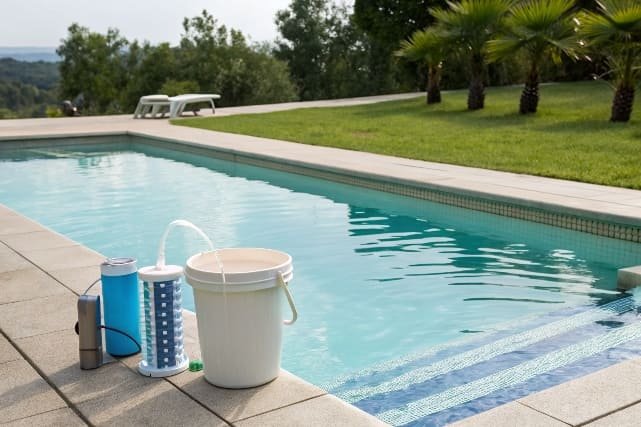
When you need to act fast, you need a product that works fast. Standard stabilized chlorine tablets7 are designed for slow, steady release and won't give you the immediate boost you need. The best options are liquid chlorine or cal-hypo shock. Liquid chlorine is my preferred choice for a rapid increase because it’s already dissolved and starts working the moment it hits the water. There's no waiting. Cal-hypo is also excellent, but it's crucial that you pre-dissolve it. I’ve seen countless pool liners8 permanently bleached because a service tech dumped the granules straight into the pool. The granules sink, and the concentrated chlorine burns the color right out of the vinyl. Always mix the granules in a five-gallon bucket of pool water9 until they are fully dissolved, and then broadcast the solution across the pool surface with the pump running. This method is safe for all pool surfaces and ensures the chlorine disperses quickly to get the free chlorine level2 back up to that critical 1-3 ppm range.
Conclusion
Properly superchlorinating your pool by dissolving shock and circulating it overnight is key. For daily needs, automated systems provide the best consistency, ensuring a safe and clear pool with less effort.
-
Learn about the shocking process to effectively eliminate contaminants and maintain pool clarity. ↩
-
Discover the importance of maintaining the right free chlorine level for swimmer safety. ↩ ↩
-
Find out how automatic chlorinators can simplify pool maintenance and improve water quality. ↩
-
Learn about salt chlorine generators and their advantages for consistent pool sanitation. ↩
-
Explore the benefits of using liquid chlorine for quick and effective pool sanitation. ↩
-
Understand the role of calcium hypochlorite in maintaining safe chlorine levels in pools. ↩
-
Discover the advantages and disadvantages of using chlorine tablets for pool sanitation. ↩
-
Learn tips to prevent damage to pool liners while shocking for optimal water clarity. ↩
-
Explore methods to keep your pool water clear and safe for swimming. ↩