
Running a commercial pool can be tough. Are you tired of the endless loop of testing and adding chemicals manually? It takes up valuable time and money.
Automated chemical dosing systems1 make commercial pool management much easier and safer. They use sensors to read water quality and add chemicals precisely, saving you time and ensuring safe, consistent water.
I remember when I first started helping out at a local pool. The biggest chore was always dealing with the chemicals. It was a constant back-and-forth, test, add, wait, re-test. It felt like we were always chasing the right numbers. I quickly realized there had to be a better way, especially for bigger, busier pools. This is why moving beyond old methods is key.
Why is it important to take safety precautions when working with pool chemicals?
Are you concerned about the risks of handling pool chemicals day after day? These substances are strong and need respect.
Taking safety precautions with pool chemicals2 is vital because they can harm skin, eyes, and lungs. Proper handling prevents accidents, protects workers, and keeps the pool environment safe for everyone.
When I think back, we had some close calls. A splash here, some dust there. It made me see firsthand how crucial safety is. It is not just about following rules; it is about protecting yourself and others. Working with concentrated chemicals means dealing with potential dangers.
Understanding Chemical Risks
Pool chemicals, like calcium hypochlorite3 or acids used for pH balance, are designed to be powerful. This power makes them effective at treating water, but it also means they can cause harm if not handled right. Contact with skin can cause burns. Breathing in dust or fumes can hurt your lungs. Mixing wrong chemicals can cause dangerous reactions. You must always remember the potential harm these substances carry.
Essential Safety Gear
This is not optional. You need the right gear every time you handle chemicals. This includes things like safety goggles or face shields to protect your eyes. You also need chemical-resistant gloves to protect your skin. Wearing protective clothing or aprons helps avoid splashes on your clothes and body. A respirator or mask can protect your lungs from dust or fumes, especially when handling powders like calcium hypochlorite. Think of it as your personal shield.
Safe Handling Practices
There are simple rules that make a big difference. Always add chemicals to water, never water to chemicals. Handle containers carefully to avoid spills. Never mix different chemicals unless the manufacturer specifically says it is safe. Have eyewash stations and safety showers nearby just in case of contact. Know where they are and how to use them. Store chemicals properly in a cool, dry, well-ventilated area, away from incompatible substances. Make sure containers are sealed tight.
The Importance of Proper Storage
How you store chemicals affects safety and product life. They need dedicated storage away from heat, moisture, and sunlight. High temperatures can make some chemicals unstable. Moisture can cause powders to react prematurely. Keep incompatible chemicals separate to prevent accidental mixing or reactions. Good storage protects your chemicals and prevents dangerous situations from happening. Following these steps protects you and keeps operations running smoothly.
Is pool automation necessary?
Does manually managing pool chemicals feel like a never-ending task that costs too much? Many commercial pool operators feel this way.
While not strictly required by law everywhere, pool automation is necessary for modern commercial operations to achieve consistent water quality, reduce labor costs, and improve safety compared to manual dosing.

From my experience, switching from manual work to automated systems changes everything. The constant checking and adding disappears. You replace uncertainty with steady control. For a busy commercial pool, this shift is not just convenient; it is transformative for the business.
Challenges of Manual Dosing
Relying on manual chemical addition has many downsides. First, it takes a lot of time and labor. Staff must constantly test the water and then measure and add chemicals. This is inefficient. Second, it is hard to be precise. Scooping or pouring chemicals often leads to over or under-dosing. This causes water quality to go up and down. Human error is always a factor, potentially leading to unsafe conditions or wasted chemicals. Maintaining consistent levels, especially in busy commercial pools with changing bather loads, is a constant struggle with manual methods.
How Automation Delivers Precision
Automated systems fix these problems. They use sensors that read water parameters like chlorine and pH in real-time, every second. A smart control system takes this data and calculates exactly how much chemical is needed. High-precision metering pumps then deliver the correct dose automatically. My insight here is that using an automated calcium hypochlorite dosing system, like the ones I know, is ideal. It handles the main disinfectant need with incredible accuracy. This takes the guesswork out of dosing.
Reducing Operational Costs
Less manual labor means lower labor costs. Your staff can focus on other important tasks instead of chemical management. Precise dosing means you use only the necessary amount of chemicals, reducing waste and lowering purchasing costs. With automated systems, like our equipment that works seamlessly with specific disinfectants, you optimize chemical usage. This also contributes to more stable operational expenses, which is a significant benefit for any business.
Ensuring Consistent Water Quality
This is perhaps the biggest benefit. Because the system constantly monitors and adjusts, water chemistry stays within the target range (like 0.3-5.0mg/L for chlorine in public pools). This consistent quality means safer water for swimmers. It also means a better swimming experience, which keeps clients happy. Consistent levels also help protect pool equipment from damage caused by unbalanced water. The system reacts to changes faster than manual testing ever could.
Compliance and Data Tracking
Many health regulations require specific water chemistry logs. Automated systems often include data recording features. They log water parameters and dosing history automatically. This makes compliance easier and provides valuable data. You can analyze trends, optimize settings, and troubleshoot issues using the logged information. This data-driven approach is crucial for professional pool management and demonstrating due diligence.
Why do pools need so many chemicals?
Do you wonder why maintaining a clean pool seems to require a whole cupboard of different chemicals? It can seem excessive at first glance.
Pools need several types of chemicals to ensure water is safe, clean, and comfortable for swimmers. The main needs are disinfection, pH balance, and preventing issues like algae.
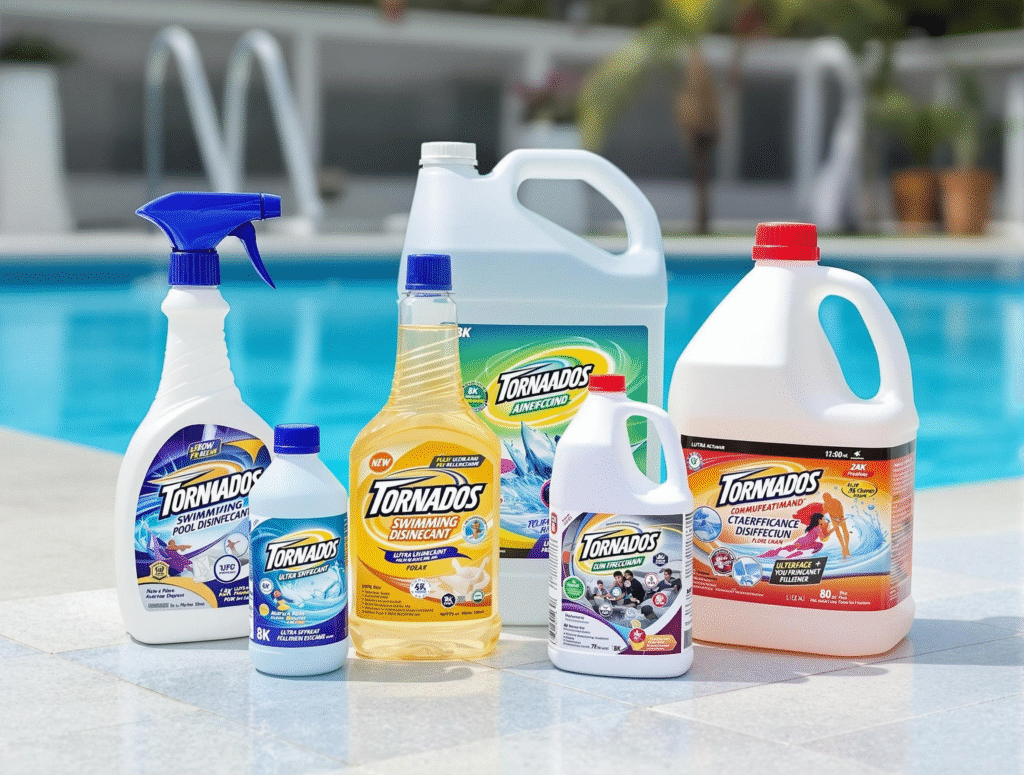
When I was learning about pool maintenance, I thought chlorine was the only thing. I quickly learned it is more complex. Different things affect water quality, and you need specific chemicals to manage each one. It is about creating the right environment for disinfection to work properly and keeping the water balanced.
The Primary Goal: Disinfection
The most critical reason for chemicals is killing harmful germs. Bacteria, viruses, and other pathogens can quickly spread in pool water. Disinfectants, most commonly chlorine-based like calcium hypochlorite, kill these microorganisms, preventing illnesses. Without proper disinfection, a pool would be a breeding ground for sickness. Maintaining the right level of disinfectant is non-negotiable for public health.
Balancing pH is Key
Disinfectants like chlorine work best within a specific pH range. If the pH is too high or too low, the disinfectant is much less effective. pH also affects swimmer comfort; imbalanced pH can irritate skin and eyes. Additionally, incorrect pH levels can damage pool equipment over time, causing corrosion or scaling. Chemicals like acids (sulfuric acid, oxalic acid, acetic acid mentioned in references) or bases are added to keep the pH balanced, usually between 7.2 and 7.8. My experience confirms that managing pH is just as vital as managing chlorine.
Beyond Disinfection: Algae Control and More
Even with good disinfection, other problems can arise. Algae can grow, making the water cloudy or green and surfaces slippery. My insight is that calcium hypochlorite is great here because it acts as both a disinfectant and an algaecide. This dual role can reduce the need for a separate algaecide chemical. Other chemicals might be needed sometimes, such as clarifiers to remove tiny particles or sequestering agents to prevent stains from minerals. The specific needs depend on the water source and environmental factors.
Consequences of Imbalance
Getting the chemical balance wrong leads to several issues. If disinfectant levels are too low, the water is unsafe. If levels are too high, it is uncomfortable for swimmers and can damage the pool structure. Incorrect pH makes chlorine less effective and can cause irritation or equipment damage. If algae gets a foothold, it requires costly and time-consuming treatment to fix. Each chemical plays a role in a complex system. Maintaining the correct levels of these few key parameters (disinfectant, pH) is essential for a safe and pleasant pool. This is where an automated system provides great value by keeping these levels steady.
What is a smart pool system?
Have you heard the term "smart pool system4" and wondered exactly what it means? It is more than just automated dosing.
A smart pool system is an automated setup that uses sensors to monitor water quality in real-time, automatically adjusts chemical dosing based on that data, and often allows for remote monitoring and control.
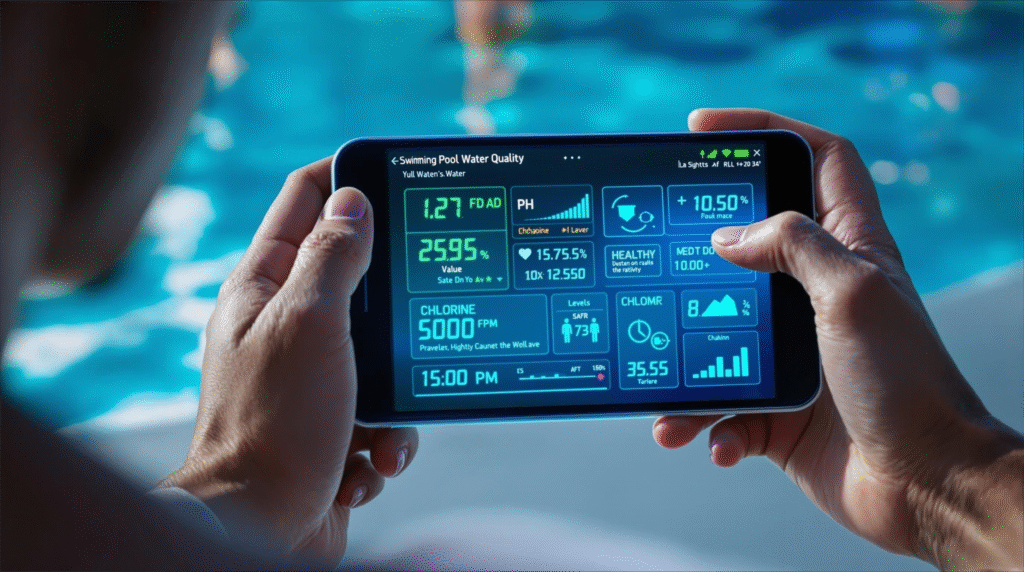
When I see a smart pool system in action, I think of it as the brain of the pool’s water treatment. It takes constant readings and makes instant decisions, like a skilled operator who never rests. It removes the manual work and replaces it with intelligent, data-driven action.
Real-Time Monitoring5 with Sensors
The foundation of a smart system is its ability to 'see' the water chemistry right now. It uses special sensors, like those for free chlorine and pH. These sensors are placed in the pool's circulation system and continuously measure the chemical levels. Some systems also measure temperature and water flow. This constant monitoring gives the system the up-to-the-minute information it needs to act. It is like having an operator testing the water every second of the day.
Intelligent Control and Dosing
The 'smart' part comes from the control system. It receives the real-time data from the sensors. Based on target levels you set (like your desired chlorine and pH range), the system calculates if chemicals are needed and how much. It then signals high-precision metering pumps to add the exact dose of chemicals, like calcium hypochlorite solution or acid. This automatic adjustment ensures the water chemistry stays within the optimal range constantly, reacting quickly to changes from swimmers or weather. This precision is hard to achieve manually.
Remote Management Capabilities
Many smart systems include connectivity features6, often using WiFi or 4G. This allows you to connect to the system remotely using a smartphone app or computer software. From anywhere, you can check the current water parameters, see the system's status, adjust settings, and even receive alerts if there is an issue. This remote access provides peace of mind and allows operators to manage multiple pools or check on the system without being physically present. It offers incredible flexibility and oversight.
The Power of Data
Smart systems don't just act; they remember. They typically record historical data on water quality parameters and chemical dosing. This data is invaluable. You can review past trends to understand your pool's specific behavior. You can use the data to optimize chemical usage and operational settings. It also provides a clear record for health department compliance or troubleshooting purposes. This data collection transforms pool management from reactive guesswork to proactive, informed decision-making. It really shows how much more efficient you can be.
Conclusion
Moving to automated chemical dosing for commercial pools is smart. It boosts safety, slashes labor costs, ensures consistent water quality, and makes management easier. It is the modern way to run a pool efficiently.
- Explore this link to understand the technology behind smart pool systems and their benefits for efficient pool management. ↩
- Learn about the critical role of sensors in maintaining optimal water quality in pools through real-time monitoring. ↩
- Discover how remote management features enhance convenience and oversight in pool maintenance, making it easier to manage multiple pools. ↩
- Explore this link to understand the comprehensive features and benefits of a smart pool system beyond automation. ↩
- Exploring this resource will provide insights into how Real-Time Monitoring enhances efficiency and decision-making across sectors. ↩
- Explore how connectivity features enhance smart systems, providing remote access and management capabilities for users. ↩